Autism Masking in Adults: Signs, Examples and Everyday Impact
Many autistic adults spend years adapting their behaviour to fit social expectations without realising they are doing it. This process, often known as masking, can help individuals navigate certain situations, but it can also require significant mental and emotional effort.
What Is Autism Masking?
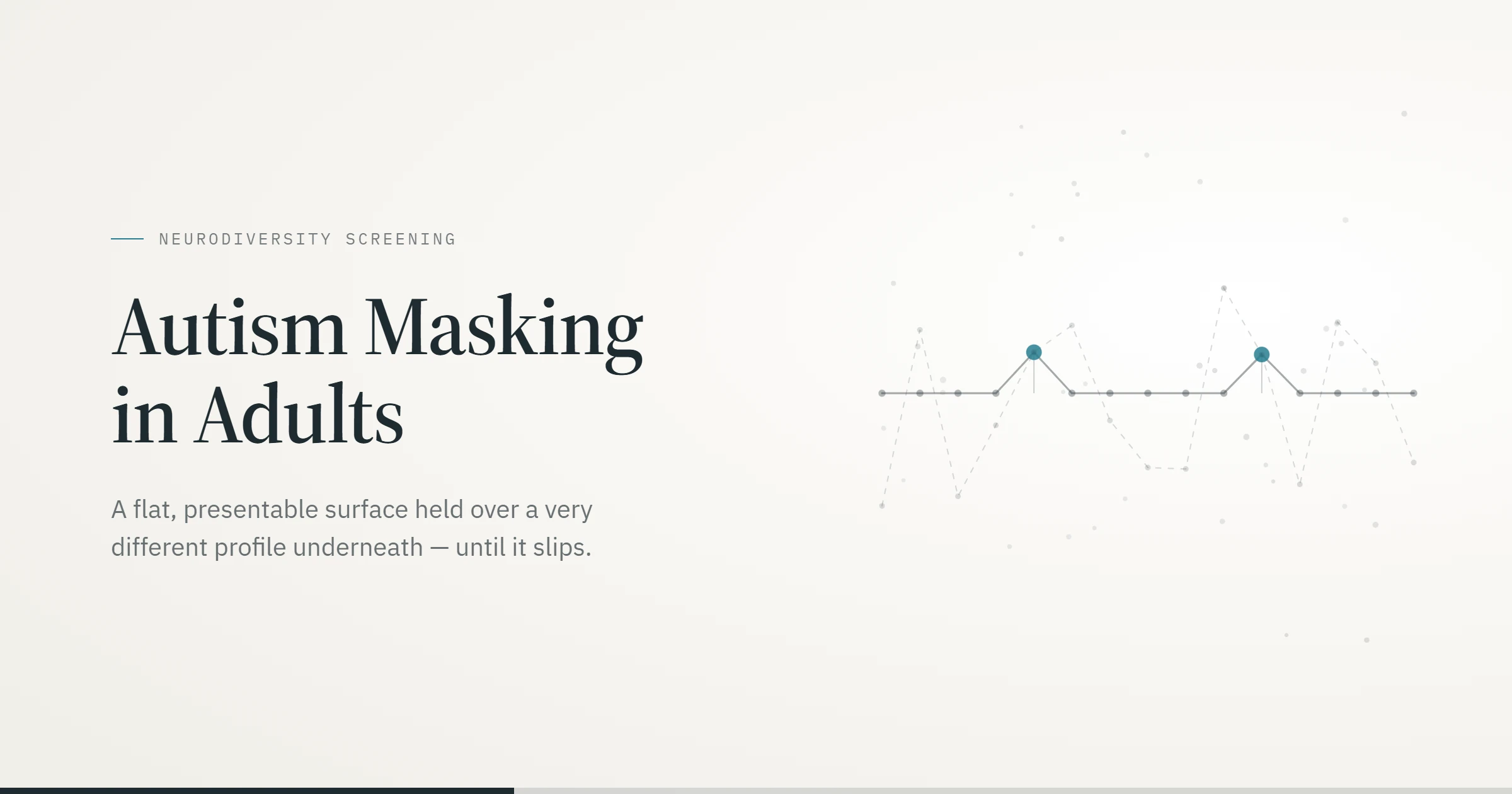
Autism masking refers to consciously or unconsciously hiding, suppressing or adapting autistic traits in order to appear more socially typical.
Masking can involve learning behaviours that help a person fit into social, educational or workplace environments, even when those behaviours do not feel natural.
Examples may include:
- Rehearsing conversations in advance
- Imitating the communication styles of others
- Hiding sensory sensitivities
- Suppressing self-soothing behaviours
- Monitoring facial expressions and body language
- Forcing eye contact despite discomfort
Many autistic adults report masking from an early age, often before they fully understand why they feel different from others.
Why Do People Mask?
Masking is often a response to social expectations.
Some people learn that certain behaviours are viewed more positively than others and begin adapting to avoid criticism, misunderstanding or exclusion.
Common reasons for masking include:
- Wanting to fit in socially
- Avoiding negative judgement
- Reducing the risk of bullying
- Meeting workplace expectations
- Feeling pressure to appear normal
- Avoiding drawing attention to differences
What Does Autism Masking Look Like?
Social Scripts
Many people develop rehearsed responses for common situations.
Copying Other People
Some individuals observe and imitate behaviours that appear socially successful.
Hiding Sensory Difficulties
A person may avoid mentioning discomfort caused by noise, bright lights, certain textures or busy environments.
Monitoring Behaviour Constantly
Some individuals describe feeling as though they are continuously observing and adjusting their behaviour throughout social situations.
Real-World Example: Sarah
Sarah attends workplace meetings and appears confident and socially engaged.
Before every meeting, Sarah spends significant time preparing discussion points, rehearsing likely conversations and reviewing social expectations.
Colleagues see a composed professional. What they do not see is the preparation, monitoring and recovery required behind the scenes.
Signs of Autism Masking in Adults
✅ Feeling exhausted after social interaction
✅ Constantly analysing conversations
✅ Rehearsing future interactions
✅ Copying social behaviours
✅ Feeling different despite appearing to fit in
✅ Hiding sensory sensitivities
✅ Needing significant recovery time after social events
✅ Feeling uncertain about your authentic self
The Impact of Masking
Mental Exhaustion
Constant monitoring and adaptation require energy.
Social Exhaustion
Interactions may feel draining because attention is divided between participating in conversation, monitoring behaviour, managing sensory information and interpreting social cues.
Difficulty Understanding Personal Needs
When someone spends years adapting to external expectations, identifying their own preferences and needs can become more difficult.
Delayed Self-Recognition
Some adults only discover autism or neurodivergent traits later in life because masking has hidden certain characteristics.
Autism Masking and Social Energy
Masking often has a direct impact on social energy.
This may help explain why some individuals need significantly more recovery time after social interactions.
Autism Masking and Executive Function
Masking can also draw upon executive functioning resources.
Planning conversations, monitoring behaviour and adjusting responses in real time may require:
- Working memory
- Attention regulation
- Cognitive flexibility
- Task switching
Is Masking Always Conscious?
Not necessarily.
Some people are fully aware that they are masking. Others only recognise masking behaviours after learning more about autism and neurodiversity.
Real-World Example: James
James enjoys spending time with friends but often feels exhausted afterwards.
After learning about masking, James realised he was constantly monitoring body language, rehearsing responses and trying to predict social expectations.
Why Understanding Masking Matters
Many adults spend years wondering why social situations feel more effortful for them.
Understanding masking can provide valuable context and support greater self-understanding.
Frequently Asked Questions
What is autism masking?
Autism masking refers to adapting, hiding or compensating for autistic traits to fit social expectations.
Do all autistic people mask?
No. Experiences vary significantly between individuals.
Can masking be exhausting?
Yes. Many people report significant mental, emotional and social fatigue associated with prolonged masking.
Can adults mask autism without realising it?
Yes. Some individuals only recognise masking behaviours later in life.
Related Resources
- Signs You May Be Neurodivergent
- Why Am I Exhausted After Socialising?
- What Is Social Energy?
- Why Cognitive Profiling?
- Screening Assessment vs Clinical Diagnosis
- Executive Dysfunction Explained
- Working Memory Explained
External Links
Explore Your Cognitive Profile
Understanding social energy, communication styles, sensory experiences and executive functioning can help build a clearer picture of how you experience the world.
- 100% Private & Anonymous
- No account required
- No password login
- No tracking cookies
- 30-day secure access code only you hold
- We never store or sell your personal screening data
⚠️ Educational Screening Notice and Disclaimer
This screening tool uses self-reported behavioural data to map cognitive trends. It does not provide a formal medical or psychiatric diagnosis of any condition. This system is designed solely to provide personal insight, highlight functional strengths and supply an organised baseline for users looking to explore their profiles further with a qualified healthcare professional