Noise Sensitivity Explained: Why Certain Sounds Feel More Intense Than Others
Do everyday sounds sometimes feel louder, more distracting or more overwhelming than they seem to be for other people? Do background conversations, traffic noise or household sounds make it difficult to concentrate or relax? If so, you may be experiencing noise sensitivity.
What Is Noise Sensitivity?
Noise sensitivity refers to a heightened response to sounds that other people may barely notice or find easy to ignore.
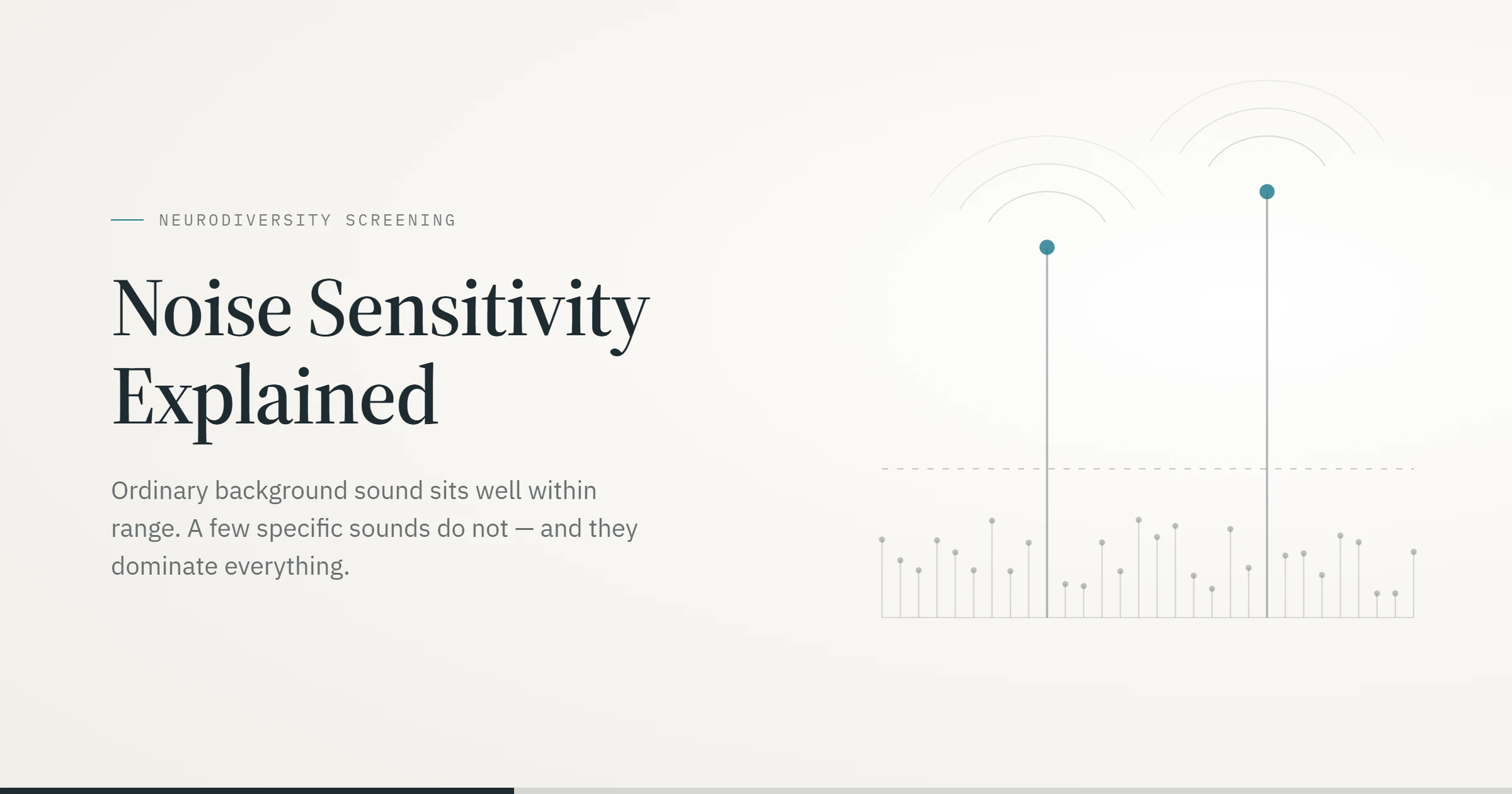
People with noise sensitivity are not necessarily hearing sounds more loudly. Instead, the brain may process certain sounds differently, making them feel more intrusive, distracting or exhausting.
What Does Noise Sensitivity Feel Like?
Common experiences include:
- Becoming distracted by background conversations
- Finding repetitive sounds difficult to ignore
- Feeling overwhelmed in noisy environments
- Struggling to concentrate when sounds compete for attention
- Feeling mentally exhausted after prolonged exposure to noise
Real-World Example: Sarah
Sarah works in an open-plan office and finds nearby conversations, ringing phones and keyboard sounds increasingly distracting throughout the day.
How the Brain Processes Sound
The brain continuously receives and processes speech, music, environmental sounds and background noise.
When noise sensitivity is present, some sounds may remain highly noticeable even when the brain would ideally filter them into the background.
Related resource: What Is Sensory Overload?
Common Types of Noise That People Struggle With
Background Conversations
- Offices
- Cafes
- Restaurants
- Waiting rooms
Repetitive Sounds
- Clock ticking
- Pen clicking
- Keyboard tapping
- Dripping taps
Sudden Unexpected Sounds
- Alarms
- Notifications
- Door slams
- Car horns
Multiple Competing Sounds
- Public transport
- Shopping centres
- Conferences
- Large social gatherings
Noise Sensitivity and Sensory Overload
Noise sensitivity can contribute to sensory overload when the amount of auditory information becomes difficult to manage.
Noise Sensitivity and Neurodiversity
Some neurodivergent individuals report heightened awareness of environmental sounds and greater difficulty filtering background noise.
Related resource: Signs You May Be Neurodivergent
Why Busy Places Can Feel Difficult
A crowded location may require a person to process multiple sounds simultaneously while navigating social and sensory demands.
Related resource: Why Do Busy Environments Feel Overwhelming?
Real-World Example: James
Busy cafes can be challenging because conversations, coffee machines, music and background noise all compete for attention.
How Noise Sensitivity Can Affect Daily Life
At Work
- Reduced concentration
- Difficulty focusing
- Mental fatigue
At Home
- Difficulty relaxing
- Irritation from background noise
Social Settings
- Difficulty following conversations
- Social fatigue
Practical Strategies for Managing Noise Sensitivity
Identify Your Triggers
Understand which sounds and environments affect you most.
Use Noise-Reducing Tools
- Noise-cancelling headphones
- Earplugs
- White noise
Choose Lower-Stimulation Environments
Consider quieter locations where possible.
Build Recovery Time Into Your Day
Related resource: Understanding Social Recovery Time
Expert Perspectives
Dr Temple Grandin
The world needs different kinds of minds.
Dr Luke Beardon
If you’ve met one autistic person, you’ve met one autistic person.
Frequently Asked Questions
What is noise sensitivity?
Noise sensitivity refers to a heightened response to sounds that may feel distracting, overwhelming or difficult to ignore.
Can noise sensitivity cause fatigue?
Yes. Constantly processing distracting or overwhelming sounds can contribute to mental exhaustion.
Related Resources
- What Is Sensory Overload?
- Why Do Busy Environments Feel Overwhelming?
- Signs You May Be Neurodivergent
- Why Am I Exhausted After Socialising?
- Social Exhaustion Explained
- Understanding Social Recovery Time
- Why Cognitive Profiling?
External Link
NHS – Hyperacusis (sound sensitivity)
Explore Your Cognitive Profile
- 100% Private & Anonymous
- No account required
- No password login
- No tracking cookies
- 30-day secure access code only you hold
- We never store or sell your personal screening data
⚠️ Educational Screening Notice and Disclaimer
This screening tool uses self-reported behavioural data to map cognitive trends. It does not provide a formal medical or psychiatric diagnosis of any condition. This system is designed solely to provide personal insight, highlight functional strengths and supply an organised baseline for users looking to explore their profiles further with a qualified healthcare professional