Neurodivergent Burnout Explained: Signs, Causes and Recovery
Have you ever reached a point where everything feels harder than it used to? Tasks that once felt manageable become overwhelming, social interaction feels exhausting and even basic responsibilities seem difficult to maintain. If so, you may be experiencing neurodivergent burnout.
What Is Neurodivergent Burnout?
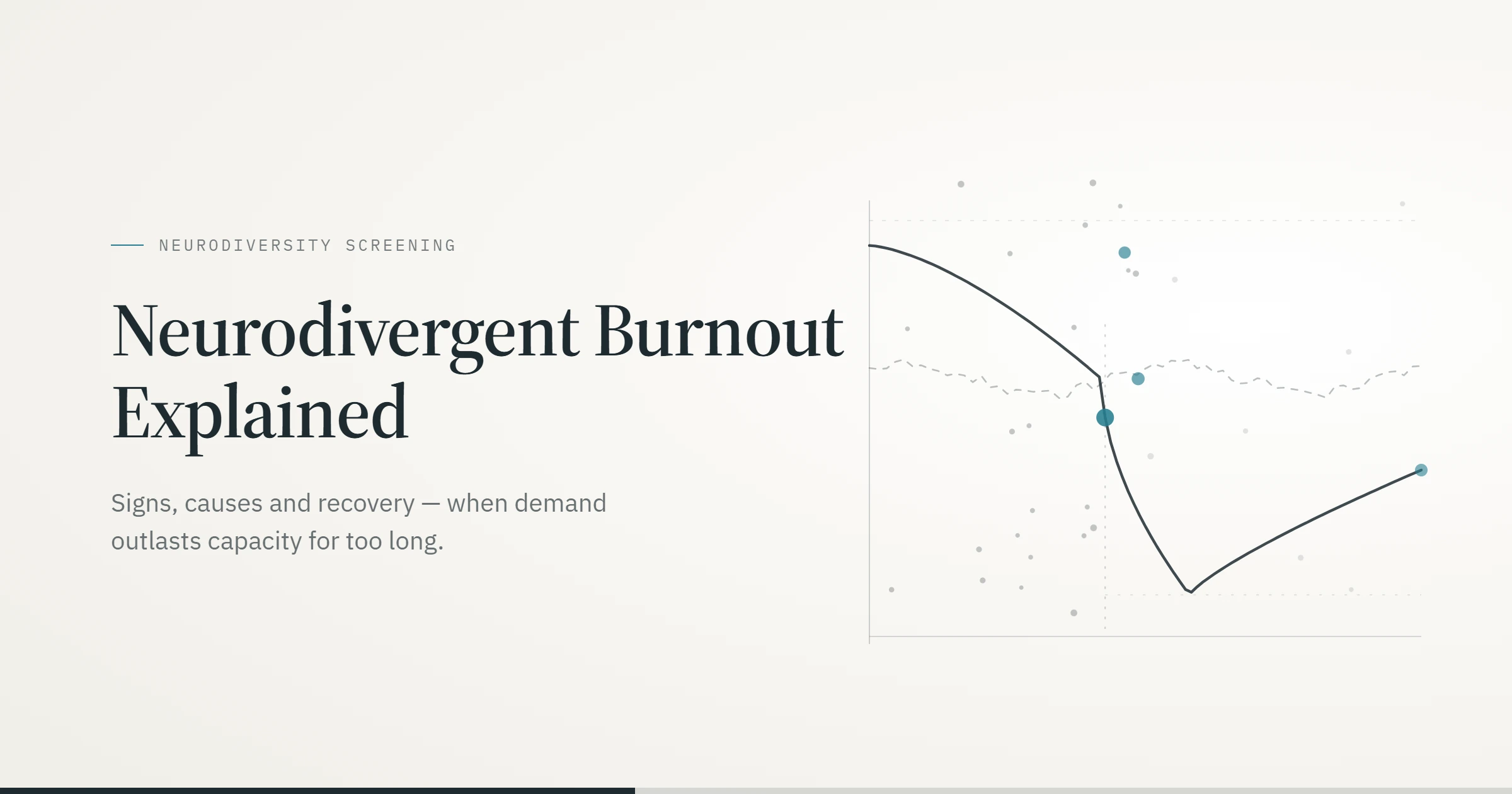
Neurodivergent burnout is a state of intense physical, mental and emotional exhaustion that can occur when the demands of everyday life exceed a person’s available resources for an extended period.
Unlike ordinary stress or fatigue, burnout often develops gradually and can affect multiple areas of life.
People experiencing burnout may notice:
- Reduced energy
- Increased overwhelm
- Difficulty concentrating
- Lower stress tolerance
- Reduced ability to manage daily responsibilities
- Greater sensitivity to sensory input
Burnout is increasingly discussed within neurodiversity because some neurodivergent individuals report sustained effort spent managing sensory, social and executive functioning demands.
What Does Neurodivergent Burnout Feel Like?
Everyone’s experience is different, but common descriptions include:
✅ Constant exhaustion
✅ Feeling overwhelmed by everyday tasks
✅ Increased sensory sensitivity
✅ Reduced motivation
✅ Difficulty concentrating
✅ Social withdrawal
✅ Struggling with routines
✅ Feeling emotionally drained
✅ Difficulty recovering energy
Many people describe feeling as though their coping strategies no longer work as effectively as they once did.
Real-World Example: Sarah
For years, Sarah successfully managed a busy workload, social commitments and family responsibilities.
Over time, however, increasing demands began requiring more effort.
Tasks that once felt simple became difficult to start. Social events felt exhausting and sensory environments became harder to tolerate.
Sarah initially assumed she was simply stressed.
Eventually, she realised that the exhaustion ran much deeper and affected nearly every area of life.
What Causes Neurodivergent Burnout?
Burnout rarely develops because of a single event.
Instead, it often emerges after prolonged periods of sustained effort, stress or adaptation.
Chronic Stress
Managing ongoing responsibilities without adequate recovery can contribute to burnout.
Examples include:
- Work pressure
- Family responsibilities
- Financial stress
- Health concerns
Sensory Demands
For some individuals, everyday environments create ongoing sensory demands.
Examples include:
- Noise
- Bright lighting
- Crowded spaces
- Constant interruptions
Related resource:
Social Demands
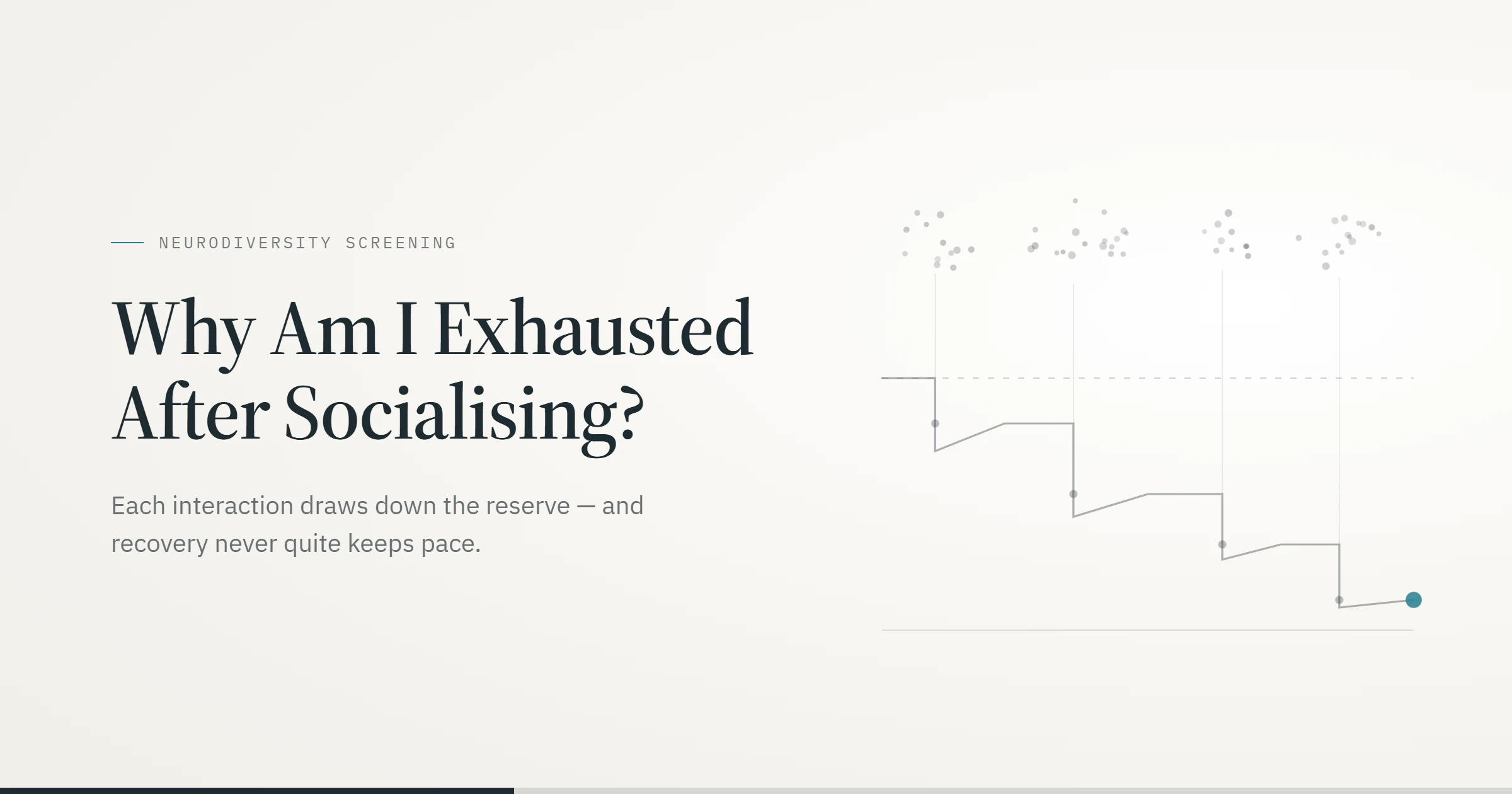
Social interaction can require significant mental energy.
This may involve:
- Communication
- Interpreting social cues
- Managing expectations
- Participating in group environments
Related resources:
Executive Function Challenges
Managing everyday tasks may require considerable mental effort when executive functioning is affected.
Examples include:
- Planning
- Organisation
- Prioritisation
- Time management
- Task initiation
Related resources:
Autism Masking and Burnout
For many autistic individuals, burnout may be associated with prolonged masking.
Masking can involve:
- Rehearsing conversations
- Monitoring body language
- Suppressing behaviours
- Managing social expectations
- Hiding difficulties
While masking may help someone navigate certain situations, maintaining these adaptations over long periods can be exhausting.
Related resource:
Signs You May Be Experiencing Burnout
Common signs include:
Cognitive Signs
- Brain fog
- Difficulty concentrating
- Forgetfulness
- Reduced productivity
Emotional Signs
- Irritability
- Frustration
- Reduced resilience
- Feeling emotionally depleted
Physical Signs
- Fatigue
- Sleep difficulties
- Reduced energy
- Increased need for rest
Social Signs
- Avoiding social situations
- Increased recovery needs
- Reduced communication
Recognising these signs early may help prevent burnout from becoming more severe.
Burnout vs Everyday Stress
Stress and burnout are related but different.
Stress
Often involves:
- Feeling overwhelmed
- Increased pressure
- Short-term recovery after rest
Burnout
Often involves:
- Long-term exhaustion
- Reduced functioning
- Difficulty recovering
- Widespread impact on daily life
Many people experiencing burnout find that ordinary rest no longer feels sufficient.
Real-World Example: James
James enjoys his work and values his relationships.
However, months of high demands, social commitments and limited recovery eventually leave him exhausted.
By the weekend, James no longer has energy for activities he previously enjoyed.
Even routine tasks feel difficult.
What began as stress gradually developed into burnout.
Burnout and Sensory Processing
Many people report increased sensory sensitivity during periods of burnout.
Sounds, lights and crowded environments may feel more overwhelming than usual.
Things that were previously manageable may suddenly feel difficult.
Related resources:
- Noise Sensitivity Explained
- Why Do Busy Environments Feel Overwhelming?
- Creating a Sensory-Friendly Environment
Recovery Strategies
Recovery looks different for everyone, but many people find the following approaches helpful.
Reduce Demands Where Possible
Burnout often reflects a mismatch between demands and available resources.
Consider:
- Adjusting commitments
- Prioritising essential tasks
- Reducing unnecessary obligations
Increase Recovery Time
Recovery should ideally be planned rather than treated as an afterthought.
Related resource:
Understanding Social Recovery Time
Support Sensory Needs
Helpful approaches may include:
- Quieter environments
- Reduced sensory stimulation
- Scheduled breaks
- Sensory-friendly workspaces
Reconnect with Enjoyable Activities
Burnout can make previously enjoyable activities feel difficult.
Gentle re-engagement with hobbies and interests may help support recovery.
Develop Greater Self-Understanding
Understanding your personal patterns can help identify which demands consume the most energy and which strategies support recovery.
Related resource:
Expert Perspectives
Dr Temple Grandin
“The world needs different kinds of minds.”
Understanding personal differences can help people move away from self-blame and towards self-awareness.
Dr Luke Beardon
“If you’ve met one autistic person, you’ve met one autistic person.”
Burnout experiences vary significantly between individuals and should not be assumed to look the same for everyone.
Why Understanding Burnout Matters
Many people experiencing burnout assume they are failing, becoming lazy or simply not trying hard enough.
Understanding burnout provides a different perspective.
Instead of asking:
“What’s wrong with me?”
It may be more useful to ask:
“What demands are exceeding my current resources?”
This shift often helps people identify practical changes that support recovery and wellbeing.
Frequently Asked Questions
What is neurodivergent burnout?
Neurodivergent burnout is a state of prolonged mental, emotional and physical exhaustion often associated with sustained demands exceeding available resources.
Is neurodivergent burnout the same as workplace burnout?
Not always. Workplace stress can contribute, but neurodivergent burnout may also involve sensory, social and executive functioning demands.
How long does burnout last?
Recovery times vary significantly depending on the individual and circumstances.
Can burnout increase sensory sensitivity?
Many people report greater sensitivity to noise, light and other sensory input during burnout.
How can I better understand my burnout patterns?
Exploring patterns in sensory processing, social energy, executive functioning and emotional regulation can help identify contributing factors.
Related Resources
- Autism Masking in Adults
- Why Am I Exhausted After Socialising?
- Social Exhaustion Explained
- Understanding Social Recovery Time
- Executive Dysfunction Explained
- Task Initiation Difficulties Explained
- Working Memory Explained
- What Is Sensory Overload?
- Why Cognitive Profiling?
External Links
National Autistic Society – Understanding autistic burnout
Explore Your Cognitive Profile
Burnout often reflects the interaction of multiple factors including sensory processing, social energy, attention, executive functioning and emotional regulation.
Understanding these patterns can provide valuable insight into how you experience the world.
- 100% Private & Anonymous
- No account required
- No password login
- No tracking cookies
- 30-day secure access code only you hold
- We never store or sell your personal screening data
⚠️ Educational Screening Notice and Disclaimer
This screening tool uses self-reported behavioural data to map cognitive trends. It does not provide a formal medical or psychiatric diagnosis of any condition. This system is designed solely to provide personal insight, highlight functional strengths and supply an organised baseline for users looking to explore their profiles further with a qualified healthcare professional