Traits, Sub-Traits and Cognitive Spectrums?
Understanding neurodiversity is about more than labels. It involves recognising the individual traits, patterns and experiences that contribute to how each person thinks, learns, works and interacts with the world.
Introduction
When people first begin exploring neurodiversity, they often encounter terms such as ADHD, autism, dyslexia or dyspraxia. While these labels can be helpful, they only tell part of the story.
To understand why, it can be helpful to explore – Why Use Cognitive Profiling?
Every person has a unique combination of characteristics that influence how they process information, manage tasks, communicate, learn and respond to their environment. These characteristics can be understood through traits, sub-traits and cognitive spectrums.
Understanding these concepts can provide a richer picture of how your mind works and why your experiences may differ from those of other people.
What Is a Trait?
A trait is a characteristic or tendency that influences how a person experiences and responds to the world.
Traits can affect many areas of everyday life, including:
- Attention and concentration
- Organisation and planning
- Sensory processing
- Social interaction
- Emotional regulation
- Learning preferences
- Communication styles
Rather than existing as isolated features, traits combine to create an individual’s overall cognitive profile.
Understanding how these traits interact is one of the key differences explained in Screening Assessment vs Clinical Diagnosis
Examples of Common Cognitive Traits
🧠 Attention & Focus
📋 Executive Function
🔊 Sensory Processing
💬 Social Energy
❤️ Emotional Regulation
📚 Learning & Processing
🔄 Preference for Routine
🧩 Special Interests
Understanding Trait Categories
Attention & Focus
This area relates to how you concentrate on tasks, manage distractions, maintain attention and shift focus between activities.
Executive Function
Executive function includes the mental skills used to plan activities, organise information, manage time, start tasks and prioritise responsibilities.
Sensory Processing
Sensory processing affects how you experience sound, light, texture, smell, temperature and movement.
Social Energy
Social energy relates to communication preferences, social recovery needs, group interactions and relationship dynamics.
Emotional Regulation
This area includes emotional awareness, managing emotional responses, coping with overwhelm and stress recovery.
What Is a Sub-Trait?
Within each trait category are smaller, more specific characteristics known as sub-traits.
Example: Executive Function
Executive Function

├── Task Initiation
├── Working Memory
├── Time Management
├── Organisation
├── Prioritisation
└── Cognitive Flexibility
A person may have difficulty with one of these areas while finding others relatively easy.
Understanding sub-traits helps explain these differences.
This is particularly important when exploring areas such as executive dysfunction, where different underlying difficulties can produce very different everyday experiences.
Why Sub-Traits Matter
Many broad labels can hide important details.
Two people may share the same diagnosis or similar difficulties, yet the underlying reasons may be completely different.
Understanding these differences can help identify strategies that are more relevant and personalised.
Cognitive profiling aims to identify these patterns so that individuals can better understand their strengths, challenges and preferred ways of working. Learn more about this approach in Why Cognitive Profiling?
What Is a Cognitive Spectrum?
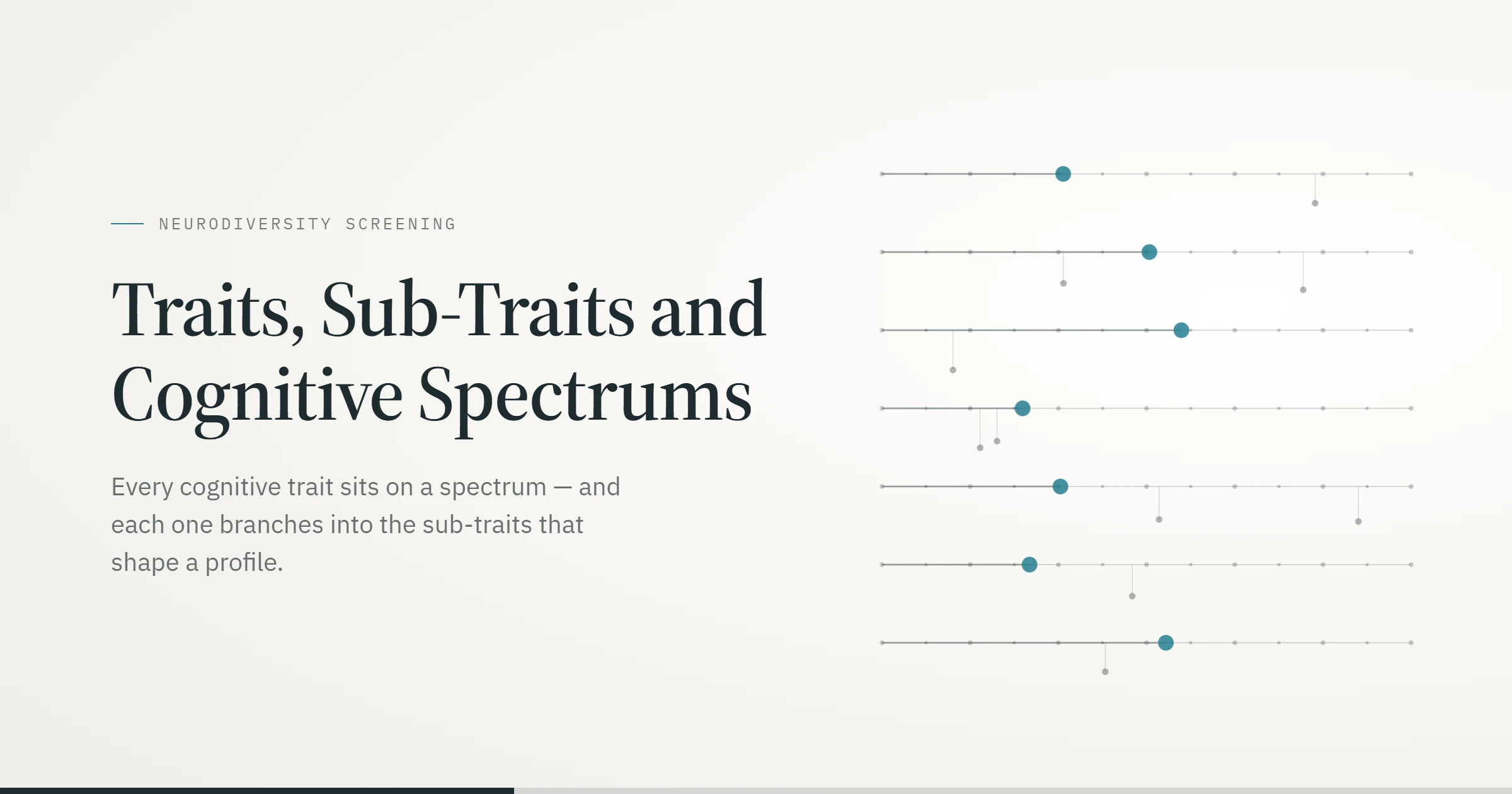
A spectrum is a range rather than a simple yes-or-no category.
Many cognitive traits exist on a continuum.
Rather than asking:
Do you have this trait?
it can be more helpful to ask:
Where does your experience sit on this spectrum?
Examples of Cognitive Spectrums
Attention & Focus
Easily Distracted ◄────────────────────► Deeply FocusedOrganisation
Highly Structured ◄───────────────────► Difficulty OrganisingSensory Sensitivity
Low Sensitivity ◄─────────────────────► High SensitivitySocial Energy
Energised by Social Interaction ◄─────► Socially DrainedPreference for Routine
Enjoys Constant Change ◄──────────────► Prefers PredictabilityWhy Spectrums Are Important
Many people assume that traits are either present or absent.
Real-life experiences are often far more nuanced.
Viewing traits through a spectrum-based lens allows for a more personalised understanding of individual differences.
How Traits, Sub-Traits and Spectrums Work Together
Trait
A broad area of cognition.
Example: Executive Function
Sub-Trait
A specific aspect of that area.
Example: Task Initiation
Spectrum
The degree to which that sub-trait affects an individual.
Task Initiation

Easy ◄────────────────────► Difficult
Why Two People Can Have Very Different Experiences
No two people are exactly alike.
Both individuals may identify with neurodivergent experiences or share similar diagnoses, yet their cognitive profiles can be very different.
Understanding these differences often provides more practical insight than labels alone.
Looking Beyond Labels
Labels can provide important recognition and support.
However, they rarely capture the full complexity of an individual’s experiences.
Understanding traits, sub-traits and spectrums allows for a more detailed exploration of strengths, challenges, preferences, thinking styles and sensory experiences.
Building Your Cognitive Profile
Your cognitive profile is the unique combination of traits and experiences that influence how you think, learn and engage with the world.
The goal of cognitive profiling is not to place people into boxes.
It is to help people better understand themselves.
Explore Related Resources
- Why Cognitive Profiling?
- Screening Assessment vs Clinical Diagnosis
- Executive Dysfunction Explained
- Signs You May Be Neurodivergent
- Why Do Some Tasks Feel Impossible to Start?
Explore Your Cognitive Profile
Discover how traits such as attention, executive functioning, sensory processing, social energy and emotional regulation combine to create your unique cognitive profile.
- 100% Private & Anonymous
- No account required
- No password login
- No tracking cookies
- 30-day secure access code only you hold
- We never store or sell your personal screening data
⚠️ Educational Screening Notice and Disclaimer
This screening tool uses self-reported behavioural data to map cognitive trends. It does not provide a formal medical or psychiatric diagnosis of any condition. This system is designed solely to provide personal insight, highlight functional strengths and supply an organised baseline for users looking to explore their profiles further with a qualified healthcare professional