Understanding Social Recovery Time: Why You May Need Time to Recharge After Socialising
Have you ever enjoyed spending time with friends, family or colleagues but still felt the need to be alone afterwards? Do you sometimes need hours or even days to recover after social events? If so, you may be experiencing something often referred to as social recovery time.
What Is Social Recovery Time?
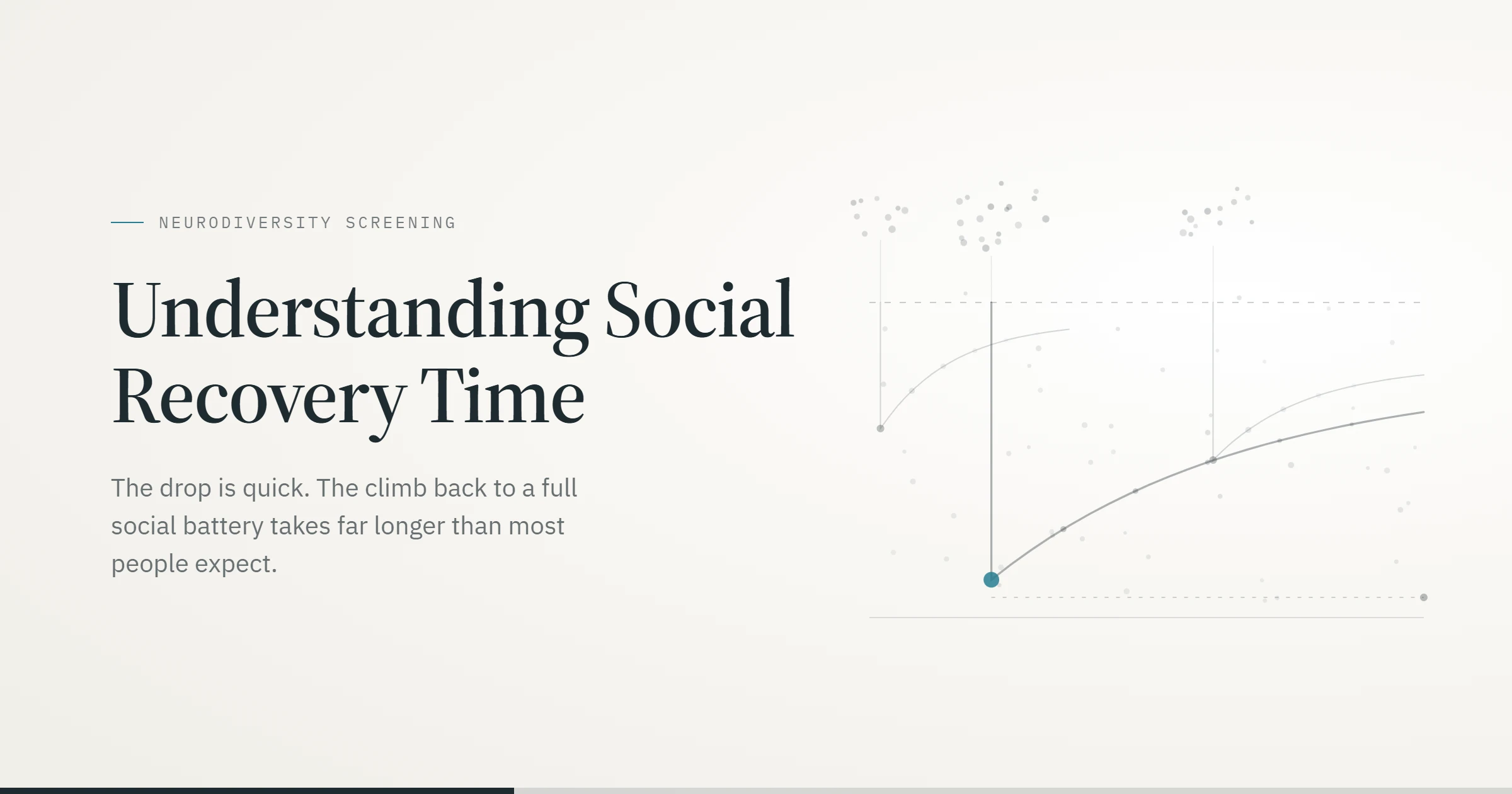
Social recovery time refers to the period needed to mentally, emotionally or physically recover after social interaction.
Just as people may need time to recover after physical activity, some individuals benefit from recovery time following social experiences.
Why Do People Need Social Recovery Time?
Social situations involve listening, responding, interpreting social cues, managing attention, processing sensory information and navigating social expectations.
For some people these processes require significant mental energy.
What Does Social Recovery Feel Like?
Common experiences include:
- Wanting quiet time after social events
- Feeling mentally tired
- Seeking lower-stimulation environments
- Spending time alone to recharge
Real-World Example: Emma
Emma attends a family gathering and enjoys spending time with relatives.
The following morning, Emma prefers a quiet day at home. Emma enjoys the interaction but also recognises the need for recovery afterwards.
Social Recovery Time and Social Energy
Social recovery is closely linked to social energy.
When social energy is depleted, recovery may help restore it.
Related resource: What Is Social Energy?
Social Recovery and Neurodiversity
Some neurodivergent individuals report needing additional recovery time because social interaction may involve increased sensory processing, communication demands or managing expectations.
Related resource: Signs You May Be Neurodivergent
Autism Masking and Recovery Needs
Masking can involve rehearsing conversations, monitoring body language and managing social expectations.
These processes require mental effort and may increase the need for recovery.
Related resource: Autism Masking in Adults
Signs You May Need More Social Recovery Time
- Feel exhausted after social events
- Need solitude after interaction
- Become overwhelmed by consecutive commitments
- Feel mentally fatigued following meetings
- Function better when social events are spaced apart
Real-World Example: James
James attends a full-day work conference.
The event is enjoyable, but by the end of the day James feels mentally exhausted and chooses a quiet evening at home.
Social Recovery Time vs Being Antisocial
Someone may enjoy socialising, maintain strong relationships and still require significant recovery time.
Factors That Can Affect Recovery Needs
- Group size
- Sensory input
- Social environment
- Familiarity with people
- Masking
How to Support Social Recovery
- Allow time between social commitments
- Spend time in quieter environments
- Manage sensory input
- Schedule recovery periods deliberately
Practical Strategies for Social Recovery
Schedule Recovery Time Deliberately
Treat recovery as a legitimate need rather than an afterthought.
Reduce Sensory Demands
Reducing noise, lighting and other sensory input can help restore energy.
Engage in Restorative Activities
Reading, walking, hobbies and time in nature may help some people recharge.
Recognise Early Signs of Social Fatigue
Notice signs such as irritability, mental fog or reduced concentration.
Create a Personal Recovery Plan
Understanding your own patterns can help you manage social energy more effectively.
Expert Perspectives on Social Recovery
Dr Devon Price
Masking is exhausting because it requires constant self-monitoring and performance.
Dr Luke Beardon
If you’ve met one autistic person, you’ve met one autistic person.
Dr Temple Grandin
Different, not less.
Key Takeaway
Needing social recovery time does not mean you dislike people. Understanding your social energy patterns can help reduce exhaustion and improve wellbeing.
Frequently Asked Questions
What is social recovery time?
The period needed to mentally, emotionally or physically recharge after social interaction.
Is it normal to need time alone after socialising?
Yes. Recovery needs vary between individuals.
How long should social recovery take?
Recovery may take anything from an hour to several days depending on the individual and situation.
Can neurodivergent people need more social recovery time?
Some neurodivergent individuals report requiring more recovery following demanding social situations.
Related Resources
- Why Am I Exhausted After Socialising?
- Social Exhaustion Explained
- Autism Masking in Adults
- What Is Social Energy?
- Signs You May Be Neurodivergent
- Why Cognitive Profiling?
External Link
Explore Your Cognitive Profile
Understanding social recovery is one part of understanding how you experience the world.
- 100% Private & Anonymous
- No account required
- No password login
- No tracking cookies
- 30-day secure access code only you hold
- We never store or sell your personal screening data
⚠️ Educational Screening Notice and Disclaimer
This screening tool uses self-reported behavioural data to map cognitive trends. It does not provide a formal medical or psychiatric diagnosis of any condition. This system is designed solely to provide personal insight, highlight functional strengths and supply an organised baseline for users looking to explore their profiles further with a qualified healthcare professional