Social Energy: Understanding Social Interaction, Recovery and Wellbeing
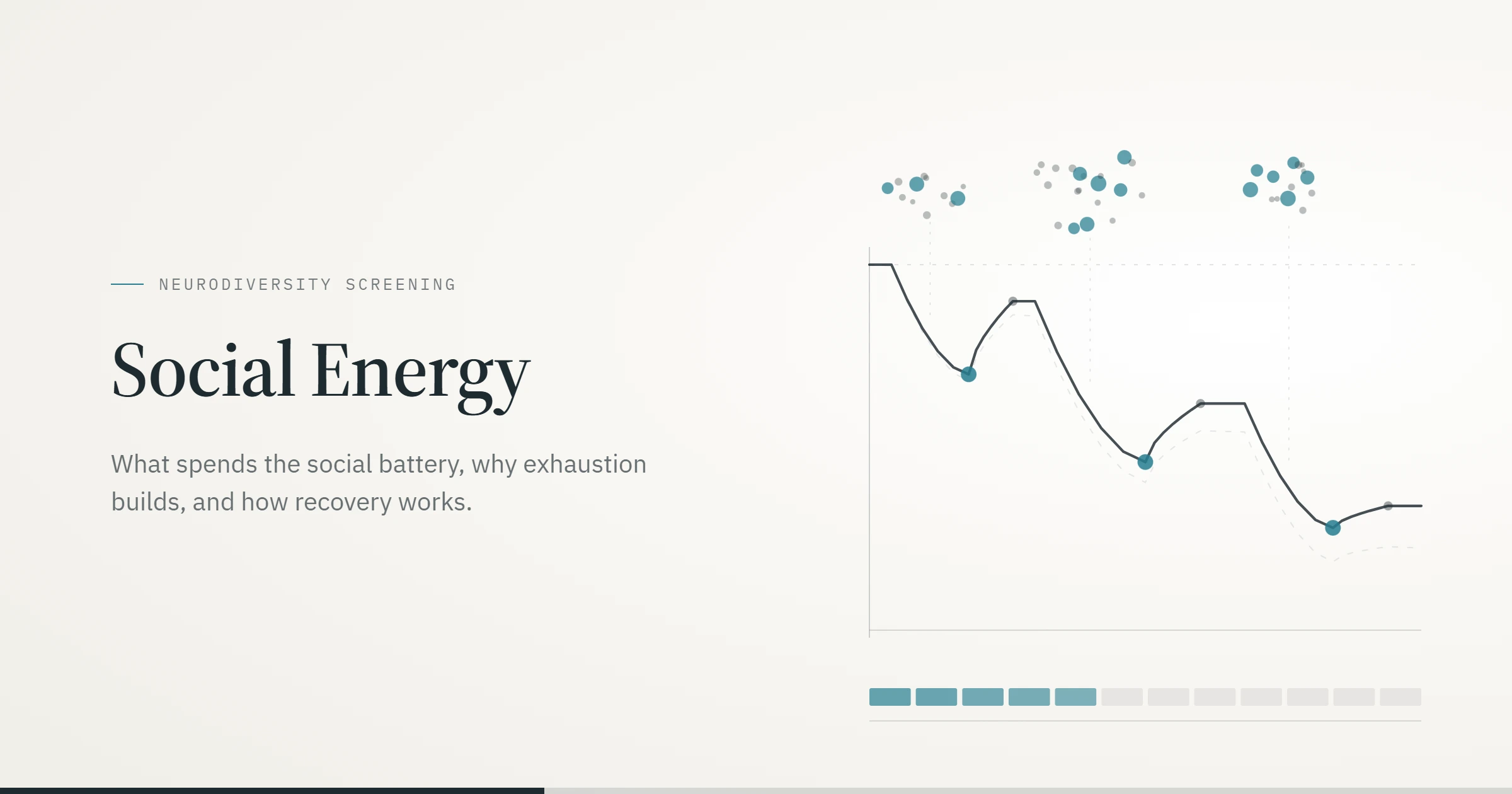
Social interaction affects everyone differently. Some people feel energised by spending time with others, while others need significant recovery time afterwards. Understanding your social energy can provide valuable insight into how you communicate, connect with others and manage your wellbeing.
What Is Social Energy?
Social energy refers to the mental, emotional and cognitive resources available for social interaction.
Just as people have different levels of physical energy, individuals also have different social energy needs.
Social energy can influence:
- Communication styles
- Social preferences
- Recovery needs
- Relationship dynamics
- Workplace interactions
- Group participation
There is no “right” amount of social energy.
The goal is understanding what works best for you.
Why Does Social Energy Matter?
Many people spend years wondering:
- Why do I feel exhausted after socialising?
- Why do some social situations feel easy while others feel draining?
- Why do I need more recovery time than other people?
- Why do I enjoy social interaction but still feel tired afterwards?
Understanding social energy helps explain these experiences.
Rather than viewing social fatigue as a weakness, it can be understood as part of an individual’s unique cognitive profile.
Related resource:
Social Energy Exists on a Spectrum
Social experiences are rarely all-or-nothing.
People fall across a broad spectrum of social energy needs
- Requires Frequent Solitude
- Energised by Frequent Social Interaction
Most people sit somewhere between these two extremes.
Social energy may also vary depending on:
- Stress levels
- Sensory environment
- Group size
- Familiarity with people
- Physical wellbeing
- Work demands
Related resource:
What Are Traits, Sub-Traits and Cognitive Spectrums?
Social Energy and Neurodiversity
Many neurodivergent individuals report unique experiences relating to social interaction and recovery.
This may involve:
- Social fatigue
- Communication differences
- Sensory sensitivities
- Social masking
- Increased recovery needs
- Different social preferences
Understanding these experiences can help people move from self-criticism to self-awareness.
Related resource:
Signs You May Be Neurodivergent
Common Social Energy Experiences
The following articles explore different aspects of social energy and recovery.
Many autistic adults describe adapting their behaviour to meet social expectations.
Masking may involve:
- Rehearsing conversations
- Monitoring body language
- Hiding sensory discomfort
- Copying social behaviours
Although masking can help people navigate social environments, it often requires significant mental energy.
Why Am I Exhausted After Socialising?
Enjoying social interaction does not always mean it is energising.
Some people feel mentally drained after meetings, gatherings or conversations because of the cognitive and sensory demands involved.
This article explores:
- Social fatigue
- Recovery needs
- Social energy differences
- Neurodivergent experiences
👉 Read: Why Am I Exhausted After Socialising?
Social Exhaustion Explained
Social exhaustion is more than occasional tiredness.
It can affect:
- Concentration
- Wellbeing
- Relationships
- Motivation
- Daily functioning
Learn about the signs, causes and recovery strategies associated with social exhaustion.
👉 Read: Social Exhaustion Explained
Understanding Social Recovery Time
Many people need deliberate recovery after social interaction.
Recovery may involve:
- Quiet environments
- Time alone
- Reduced sensory input
- Restorative activities
This article explores how social recovery works and why different people require different amounts of recovery time.
👉 Read: Understanding Social Recovery Time
Signs Your Social Energy May Be Running Low
You may benefit from additional recovery if you:
✅ Feel mentally drained after social events
✅ Need time alone to recharge
✅ Struggle with back-to-back social commitments
✅ Feel overwhelmed in large groups
✅ Avoid social plans due to exhaustion
✅ Experience sensory overload in busy environments
✅ Need longer recovery periods than people around you
Recognising these signs can help you make more informed decisions about your social commitments.
Social Energy, Sensory Processing and Executive Function
Social energy does not exist in isolation.
Many people find that social experiences are influenced by:
Sensory Processing
Noise, lighting and busy environments can affect energy levels.
Future resources:
- What Is Sensory Overload?
- Noise Sensitivity Explained
Executive Function
Managing conversations, switching attention and planning responses may draw on executive functioning skills.
Related resources:
- Executive Dysfunction Explained
- Working Memory Explained
Attention & Focus
Attention regulation can also influence how social situations feel.
Related resources:
- Dopamine, Motivation and Neurodiversity
- What Is Hyperfocus?
Building a Healthy Relationship with Social Energy
Understanding your social energy is not about limiting your life.
It is about recognising your needs and making choices that support wellbeing.
Helpful approaches may include:
- Scheduling recovery time
- Managing sensory demands
- Creating realistic social commitments
- Communicating boundaries
- Recognising early signs of fatigue
- Developing self-awareness
Understanding these patterns can help reduce overwhelm and support healthier relationships with work, family and social life.
Frequently Asked Questions
What is social energy?
Social energy refers to the mental, emotional and cognitive resources available for social interaction.
Why do I feel exhausted after socialising?
Social situations can involve communication, attention, sensory processing and social expectations, all of which require energy.
Is social exhaustion a sign of neurodivergence?
Not necessarily. However, social exhaustion is commonly discussed within neurodiversity because some neurodivergent individuals report higher social energy demands.
How much social recovery time is normal?
Recovery needs vary significantly between individuals. Some people recover quickly, while others may require longer periods to recharge.
Can understanding my cognitive profile help?
Yes. Exploring patterns across social energy, communication, sensory processing and executive functioning can provide valuable self-understanding.
Related Resources
Cornerstone Guides
- Why Cognitive Profiling?
- Screening Assessment vs Clinical Diagnosis
- What Are Traits, Sub-Traits and Cognitive Spectrums?
- Signs You May Be Neurodivergent
Executive Function
- Executive Dysfunction Explained
- Task Initiation Difficulties Explained
- What Is Time Blindness?
- Working Memory Explained
Attention & Focus
Social Energy
- Autism Masking in Adults
- Why Am I Exhausted After Socialising?
- Social Exhaustion Explained
- Understanding Social Recovery Time
External Link
Explore Your Cognitive Profile
Social energy is one part of a much larger picture.
Explore how social interaction, attention, executive functioning, sensory processing and emotional regulation combine to create your unique cognitive profile.
- 100% Private & Anonymous
- No account required
- No password login
- No tracking cookies
- 30-day secure access code only you hold
- We never store or sell your personal screening data
⚠️ Educational Screening Notice and Disclaimer
This screening tool uses self-reported behavioural data to map cognitive trends. It does not provide a formal medical or psychiatric diagnosis of any condition. This system is designed solely to provide personal insight, highlight functional strengths and supply an organised baseline for users looking to explore their profiles further with a qualified healthcare professional