What Is Sensory Overload? Signs, Causes and Everyday Experiences
Have you ever walked into a busy shopping centre and immediately felt overwhelmed by the noise, lights and movement around you? Do crowded environments leave you feeling exhausted, anxious or unable to think clearly? If so, you may have experienced sensory overload.
What Is Sensory Overload?
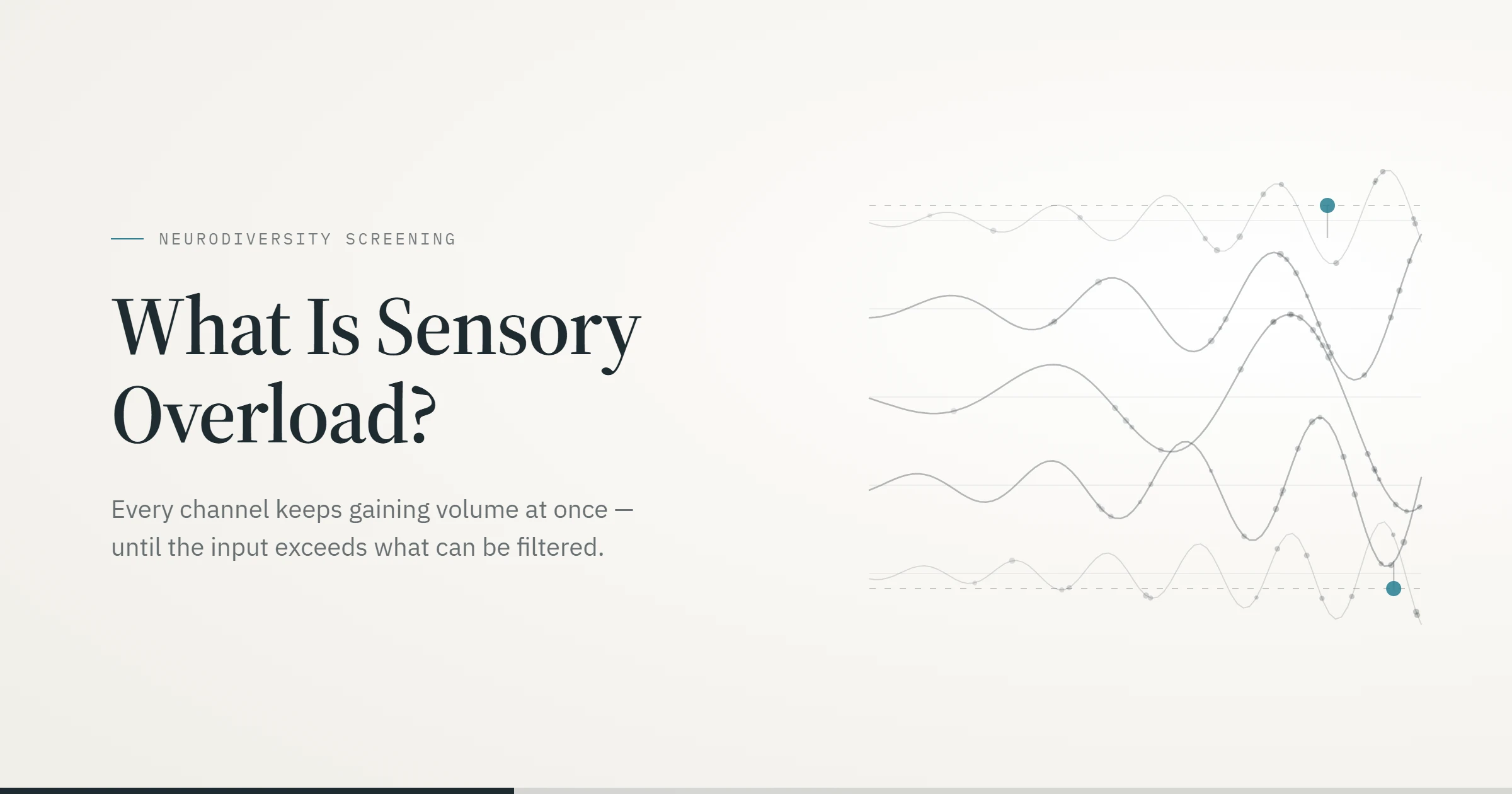
Sensory overload occurs when the brain receives more sensory information than it can comfortably process at one time.
Our brains are constantly processing information from the environment, including sounds, lights, textures, smells, movement, temperature and visual information.
What Does Sensory Overload Feel Like?
Common descriptions include:
- Feeling overwhelmed by noise
- Difficulty concentrating
- Feeling mentally exhausted
- Increased irritability
- Difficulty processing conversations
- Feeling unable to think clearly
- Wanting to leave the environment
Real-World Example: Sarah
Sarah visits a busy shopping centre on a Saturday afternoon. Music is playing, people are talking, lights are bright and the environment feels crowded. After a short period, the combination of sensory demands becomes overwhelming.
How Does Sensory Processing Work?
Sensory processing refers to how the brain receives, organises and responds to information from the environment.
Related resource: What Are Traits, Sub-Traits and Cognitive Spectrums?
Common Causes of Sensory Overload
Noise
- Multiple conversations
- Loud music
- Traffic sounds
- Crowded public spaces
Bright Lights
- Fluorescent lighting
- Flashing lights
- Bright screens
Crowded Environments
- Shopping centres
- Public transport
- Concerts
- Large social events
Multiple Sensory Inputs
Sensory overload often develops when several sensory demands occur simultaneously.
Signs of Sensory Overload
Cognitive Signs
- Difficulty concentrating
- Mental fog
- Slower thinking
Physical Signs
- Fatigue
- Headaches
- Tension
Emotional Signs
- Frustration
- Irritability
- Feeling overwhelmed
Sensory Overload and Neurodiversity
Sensory overload is frequently discussed within neurodiversity and may be associated with autism, ADHD, AuDHD and sensory processing differences.
Related resource: Signs You May Be Neurodivergent
Sensory Overload and Social Energy
Sensory processing and social energy are often closely connected.
Related resources:
- Why Am I Exhausted After Socialising?
- Social Exhaustion Explained
- Understanding Social Recovery Time
Practical Strategies for Managing Sensory Overload
- Identify common triggers
- Take sensory breaks
- Reduce unnecessary stimulation
- Use quieter environments
- Plan recovery time
Expert Perspectives
Dr Temple Grandin
The world needs different kinds of minds.
Dr Luke Beardon
If you’ve met one autistic person, you’ve met one autistic person.
Frequently Asked Questions
What is sensory overload?
Sensory overload occurs when the brain receives more sensory information than it can comfortably process.
Is sensory overload a sign of autism?
Some autistic people experience sensory overload, but sensory overload is not exclusive to autism.
Can ADHD cause sensory overload?
Some people with ADHD report sensory sensitivities and experiences of sensory overload.
Related Resources
- Signs You May Be Neurodivergent
- Why Cognitive Profiling?
- What Are Traits, Sub-Traits and Cognitive Spectrums?
- Why Am I Exhausted After Socialising?
- Social Exhaustion Explained
- Understanding Social Recovery Time
- Autism Masking in Adults
External Links
Explore Your Cognitive Profile
- 100% Private & Anonymous
- No account required
- No password login
- No tracking cookies
- 30-day secure access code only you hold
- We never store or sell your personal screening data
⚠️ Educational Screening Notice and Disclaimer
This screening tool uses self-reported behavioural data to map cognitive trends. It does not provide a formal medical or psychiatric diagnosis of any condition. This system is designed solely to provide personal insight, highlight functional strengths and supply an organised baseline for users looking to explore their profiles further with a qualified healthcare professional