Social Exhaustion Explained: Signs, Causes and Recovery
Have you ever returned home after a social event feeling completely drained, even when you enjoyed yourself? Do conversations, meetings or gatherings sometimes leave you needing hours or even days to recover? If so, you may be experiencing social exhaustion.
What Is Social Exhaustion?
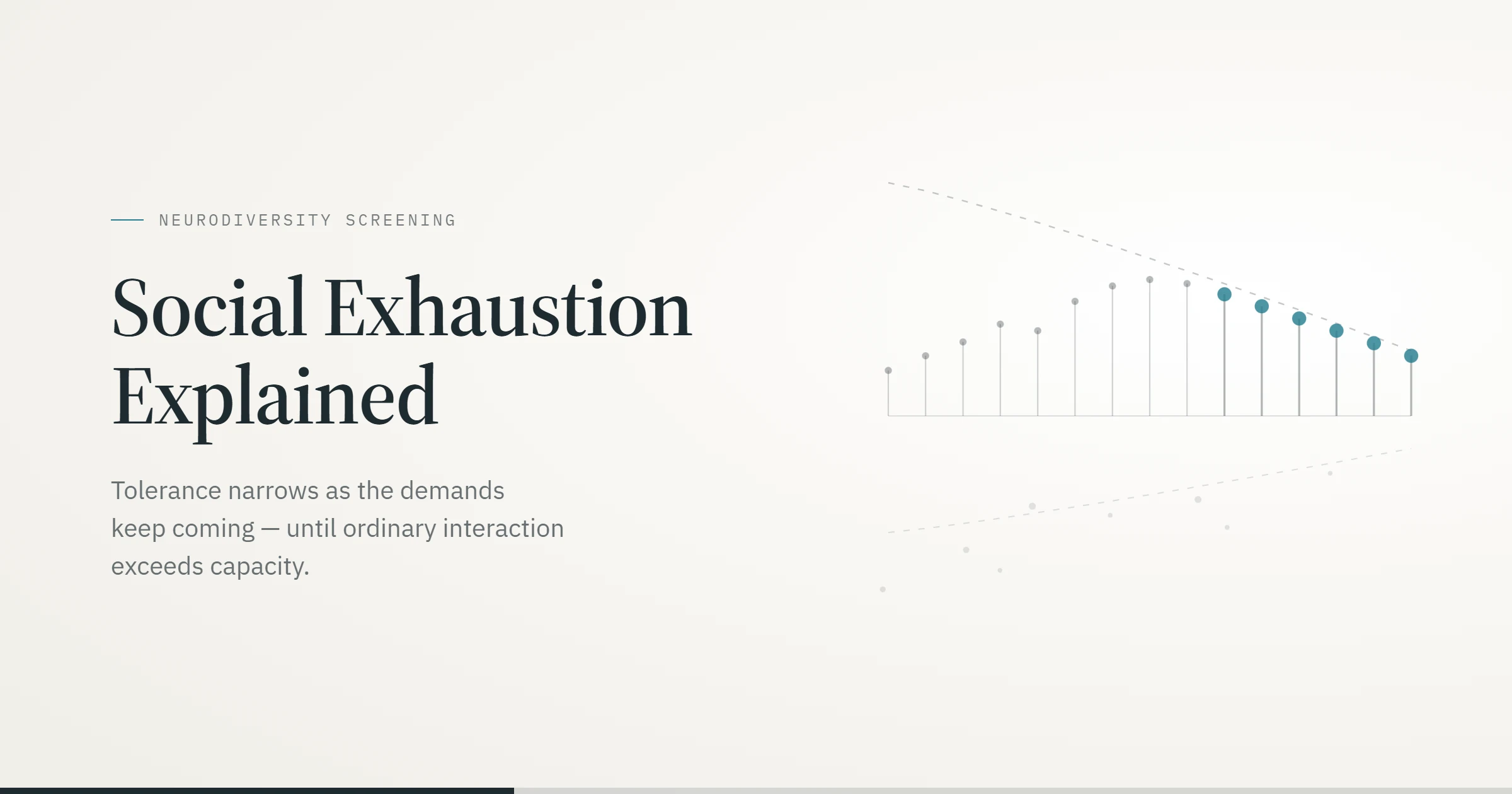
Social exhaustion refers to the mental, emotional and sometimes physical fatigue that can occur after social interaction.
While everyone experiences tiredness occasionally, social exhaustion is typically associated with the amount of energy required to engage with other people, process information and navigate social situations.
Social exhaustion is not necessarily linked to disliking people or avoiding relationships.
Many individuals who experience social exhaustion genuinely enjoy spending time with others but find that social interaction requires significant effort.
Related resource:
Why Am I Exhausted After Socialising?
Signs of Social Exhaustion
Social exhaustion can affect people in different ways.
Common signs include:
- Feeling mentally drained after social events
- Wanting time alone after conversations
- Difficulty concentrating following group interactions
- Feeling overwhelmed by prolonged social situations
- Cancelling plans due to fatigue
- Needing significant recovery time after meetings or events
What Causes Social Exhaustion?
Social Information Processing
Conversations require constant attention, interpretation and response.
Sensory Overload
Many social environments contain background noise, bright lighting and multiple conversations.
Social Expectations
Many social situations involve navigating unwritten social rules and expectations.
Autism Masking and Social Exhaustion
For some autistic individuals, social exhaustion may be linked to masking.
Masking involves adapting or suppressing behaviours in order to meet perceived social expectations.
Related resource:
Social Exhaustion and Neurodiversity
Some people may experience fatigue related to:
- Autism
- ADHD
- AuDHD
- Sensory sensitivities
- Communication differences
- Executive functioning demands
Related resource:
Signs You May Be Neurodivergent
Real-World Example: James
James attends a work conference that involves networking throughout the day.
Although the event is interesting and enjoyable, James feels completely exhausted afterwards.
The exhaustion does not result from the event being unpleasant. Instead, it reflects the amount of energy required to maintain social engagement.
Social Exhaustion vs Introversion
Introversion is generally considered a personality preference.
Social exhaustion refers specifically to fatigue experienced following social interaction.
How to Recover from Social Exhaustion
Many people find it helpful to:
- Spend time alone
- Reduce sensory input
- Rest in a quiet environment
- Engage in favourite interests
- Take regular breaks during social events
Why Understanding Social Exhaustion Matters
Understanding social exhaustion can help people recognise that different individuals have different social energy needs.
Related resources:
- Why Cognitive Profiling?
- What Is Social Energy?
- What Are Traits, Sub-Traits and Cognitive Spectrums?
Frequently Asked Questions
What is social exhaustion?
Social exhaustion is mental, emotional or physical fatigue that occurs following social interaction.
Is social exhaustion the same as social anxiety?
No. Social anxiety relates to worry about social situations, while social exhaustion describes fatigue.
Can social exhaustion be related to autism?
Some autistic individuals report experiencing social exhaustion, particularly in demanding social environments.
Related Resources
- Why Am I Exhausted After Socialising?
- Autism Masking in Adults
- What Is Social Energy?
- Why Cognitive Profiling?
- Signs You May Be Neurodivergent
- Screening Assessment vs Clinical Diagnosis
External Link
Explore Your Cognitive Profile
Social exhaustion is just one aspect of understanding how you interact with the world.
- 100% Private & Anonymous
- No account required
- No password login
- No tracking cookies
- 30-day secure access code only you hold
- We never store or sell your personal screening data
⚠️ Educational Screening Notice and Disclaimer
This screening tool uses self-reported behavioural data to map cognitive trends. It does not provide a formal medical or psychiatric diagnosis of any condition. This system is designed solely to provide personal insight, highlight functional strengths and supply an organised baseline for users looking to explore their profiles further with a qualified healthcare professional